How the Onboarding Process Works Before a Bespoke In-Residence English Immersion
Before any in-residence immersion takes place, there is a process that Cláudio Habibe will not bypass.
It is not a formality.
It is not an administrative procedure.
It is one of the structural reasons why the immersion consistently delivers what it promises.
Why onboarding exists
The Bespoke In-Residence English Immersion is an intensive, private and fully personalised format.
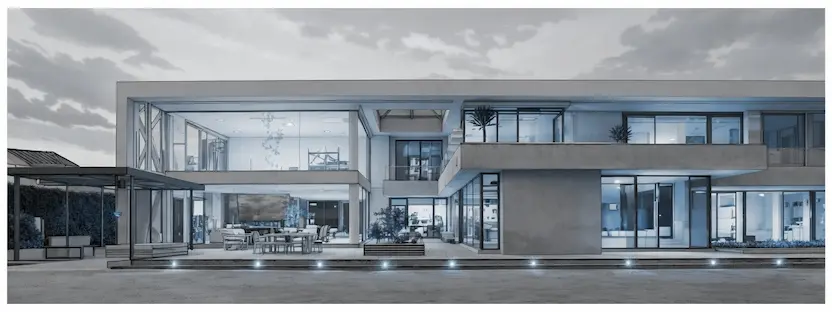
It takes place inside the participant’s own residence — for one or more consecutive days, under complete confidentiality, built around the participant’s real professional communication contexts.
For this format to function at the depth it requires, two things must exist before the first day of immersion:
Precision — a clear understanding of the participant’s professional context, objectives, linguistic pressure points and what specifically needs to be addressed.
Trust — between the participant and Cláudio Habibe. An in-residence immersion is unlike any other language development format. The professional enters the participant’s home. That requires that both parties know each other before it begins.
Cláudio values this process not only for the results it produces — but because he also needs to know who he will be spending days with inside a private residence. The selectivity is mutual.
The two onboarding paths
Path 1 — Conversational sessions before the immersion
The most frequent format among participants who are not working under immediate time pressure.
Before the in-residence immersion, the participant completes one to two months of structured English conversation sessions by video call — with the same frequency and professional focus as regular ongoing sessions.
These conversations serve multiple purposes simultaneously:
- building the relationship progressively — the participant and Cláudio come to know each other in a low-pressure environment before the intensity of the immersion
- mapping the real professional context — the situations where English appears, where communication loses consistency, which scenarios need to be mastered
- calibrating the current level — not through a formal test, but through direct observation of how the person thinks and communicates in English in real time
- establishing mutual trust — the condition under which the in-residence immersion can operate at its full depth
For the participant, these months of sessions already represent concrete progress — independent of the immersion that follows.
For Cláudio, they represent the most precise diagnostic available: not a questionnaire, but direct observation of how a person thinks and communicates under conversational conditions.
Path 2 — Intensive 10-day onboarding
The format for participants with genuine urgency — an upcoming international trip, a critical negotiation, a role transition with immediate high English-language demand.
In this case, Cláudio structures an intensive 10-day onboarding with focused conversations designed for:
- precise diagnostic of the participant’s current communication
- mapping of the professional scenarios that will be addressed during the immersion
- alignment of objectives and format
- establishing the trust and mutual understanding necessary for the in-residence immersion to function at depth
These ten days are not a compressed version of the longer process.
They are a surgical diagnostic — concentrated on what is essential for the immersion to be built with precision and for it to produce real results.
What the onboarding reveals — and why this matters
During the onboarding process, one thing becomes clear relatively quickly:
Whether there is alignment — or not.
The Bespoke In-Residence English Immersion is a demanding format. It requires genuine commitment from the participant, openness to working with depth, and compatibility with the method.
When alignment does not exist, it is far better that this becomes apparent before the immersion — not during it.
The onboarding protects the participant from investing in a format that is not right for them at this moment.
And it protects the quality of Cláudio’s work — ensuring that every immersion he conducts has the conditions necessary to deliver genuine results.
This selectivity is not exclusivity for its own sake.
It is the only honest way to guarantee that the immersion delivers what it promises.
Onboarding as part of the result
An in-residence immersion without onboarding would be like a tailor cutting a suit without ever measuring the person who will wear it.
The fabric may be exceptional. The execution may be precise.
But the result will not be what it could be.
The onboarding is the measurement.
It is what transforms a generic immersion into one built specifically for that person, at that moment, in that professional context.
How to begin
The entry point is always the same — a Private Diagnostic Conversation, conducted online, 30 minutes, without commitment.
During this conversation:
- the participant’s professional context and communication needs are mapped
- the most appropriate onboarding path is assessed — ongoing sessions over weeks or the intensive 10-day format
- alignment between the participant’s profile and the model is evaluated
If alignment exists — the process begins.
If it does not — the conversation concludes without commitment on either side.
👉 Request Private Diagnostic Conversation
Each engagement is individually structured and selectively offered.
Frequently asked questions
Is onboarding required before every in-residence English immersion? Yes. Cláudio Habibe does not conduct in-residence immersions without a prior onboarding process — whether the extended format of conversational sessions over weeks or the intensive 10-day diagnostic. These conversations are structural components of the method, not optional formalities.
Why does Cláudio Habibe require these initial conversations before the immersion? For two equally important reasons. First, to build a precise understanding of the participant’s professional context — so the immersion can be genuinely personalised rather than generic. Second, because the immersion takes place inside the participant’s own residence, which requires mutual trust. Cláudio also needs to know who he will be spending days with in a private environment. The selectivity is bilateral.
What is the difference between the two onboarding paths? The first path — structured conversation sessions by video call over one to two months — is the most frequent and produces the most complete diagnostic. The second — an intensive 10-day onboarding — is designed for participants with genuine urgency who need the in-residence immersion sooner. Both paths serve the same essential purposes: precision, alignment and trust.
Does the onboarding process itself produce progress in English? Yes. The conversation sessions during onboarding carry the same focus and quality as regular ongoing sessions. The participant develops fluency during the process, independent of the in-residence immersion that follows.
What happens if alignment is not established during onboarding? The process concludes without commitment on either side. The onboarding exists precisely so that lack of alignment is identified before the immersion — not during it. This protects the participant from investing in a format that is not right for their current moment, and protects the integrity of the immersion itself.
Can the onboarding sessions count toward the immersion investment? This depends on the structure agreed during the initial diagnostic conversation. In some cases, the onboarding sessions form part of a broader engagement that includes the immersion. In others, they are structured separately. This is always clarified before any commitment is made.
Cláudio Habibe conducts Bespoke In-Residence English Immersions in high-end residential communities across the interior of São Paulo — always preceded by a structured onboarding process that is a core component of the method and a condition for consistent results. Online sessions by video call are also available for professionals anywhere in Brazil or internationally.